
Some plotters things a pantser could try
can i convert you?
CRAFT is a reader-supported email newsletter about the nuts and bolts of fiction writing and the world of publishing.
Sorry for last week everyone. That was the first time in this Substack’s three year history that I missed posting something so that it would be ready for Tuesday at 11. I turned in my novel—the response to developmental edits—to my editors on Monday and within a few hours came down rapidly with what I’m pretty sure is the flu. I think it was my body’s way of saying, okay, enough of this. I also get into my feelings whenever I finish a massive project because I’m sniffing around, wondering what I should do next, because if I’m not doing something, do I even exist?
I want to return to some of my thoughts from my post two weeks ago:
Why you can't finish your novel

CRAFT is a reader-supported email newsletter about the nuts and bolts of fiction writing and the world of publishing.
Some of that post had to do with the skepticism of the efficiency of being a pantser, as opposed to a plotter. Because I do not believe that writing is mystical, there are things I believe a panster can do if they would like to be more organized, systematic, and efficient in their writing. This is the basic idea of doing some architectural work before you start writing. Because I’m at the extreme end of organizing things before I start writing, I’m not going to suggest that you do exactly what I do, but something that’s more like a 3 on a scale of 1 to 10.
My proposal is to take a vague idea you have for a novel (or perhaps a novella—something pretty long) and to work on developing it before you start writing. This can be a work in progress you’ve already started, or it can just be an idea you have that you’ve been mulling over that you haven’t done anything with. You could develop your idea during the act of writing itself, but I’m not a huge fan of that process in terms of efficiency and making solid plots. Also, this makes it more likely that once you’ve written the prose, you become to married to what you already have down because you’ve already done the work. This is the “I have Dany stuck in Meereen and those sections are kind of boring, but now I have to figure out how to get her out of here, because I’ve already published this and can’t undo it” problem. (This is a Storm of Swords reference if you have no idea what I’m talking about.) Writing prose to figure out where you’re going next is kind of like dressing yourself while walking. I mean, you could do that, but why? And many people believe “But I have to write in order to figure things out”— that’s okay. But why is it prose you have to write? Why can’t it be the organizational text I’m referring to? At the extreme end, I know that writing things in cells in an Excel file is the definition of unsexy, but doing that sort of ground work is exactly how you can pull of elaborate, complex plot threads coming together.
I think this sort of organizational work is akin to surfacing something from your subconscious. Sometimes you’re just kind of making something up and it ends up sticking and feeling “right.” Other times I make a fairly arbitrary decision and then end up changing my mind ultimately. For example before I wrote my third book (unpublished) I did a lot of character work. One of the main characters is this weird guy who is a celebrity, a heavy metal guitarist. For whatever reason, his sexuality and relationship status was sort of blank to me and for some reason I couldn’t figure it out. I had the sense that he had relationships that would end up on TMZ but not actually what those relationships were. As someone who is young, talented, and very rich, surely there’d be lots of girls around? It turns out that something wasn’t feeling “right” because I hadn’t fully connected the other parts of his psyche—his very difficult childhood—to how he would approach his relationships. (A big DUH! for me, as a psychologist, of course those things are strongly connected.) I realized though many girls would be interested in him, his romantic life would be really chaotic because his intense fears of abandonment would drive him to do kind of erratic and crazy things. In other words, poking people at the same time asking why they are running away.
These are my thoughts: I’m going to suggest making three worksheets. Give yourself an hour to work on them, but I would recommend doing one at a time. One is for plot/premise, one is for character, and one is for theme. I think it makes the most sense to do the theme one last.
Character
Do one worksheet per each main character in your book. If you don’t know the answer to a question, move on and answer the other ones and come back to it once you’ve done the other worksheets. If you still don’t know, make up an answer.
Who is this person? (briefly, in one sentence, like what would be on the back of the book.)
What do they want? (literally, and figuratively)
What stands in their way?
Who do other people think they are?
Who do they think they are?
What do they seem like? (I sort of mean appearance, but if appearance included things like “they are awkward” or “they are enormously charismatic” as well).
What are they good at?
What are they bad at?
Everybody has a life. This person is just not standing around and waiting for you to introduce plot to them via lightning strike. What is the biggest drama going on in their life BEFORE your story starts? [So a really good example of this is the kids from The Chronicles of Narnia or Harry from Harry Potter. Those kids are not interesting. They are just sitting around until they discover the cabinet or Hedwig arrives with an invitation to Hogwarts. That’s boring. An example of “I already have a life” that works is in God of the Woods— this girl goes missing from camp. It turns out she’s from a family where another kid already went missing years ago. That is a family where some shit is already happening. In my second book, the teens are just normal kids until they witness a murder, but they all have major things going on in their lives: will James self sabotage by not completing his application to art school? Does super-driven Casey’s life explode if he doesn’t meet his life-long goal of getting into a D1 school? Jia is starting to experience psychic phenomenon, which she is in denial about. I could have independently written books about all those things.
Why would someone other than me want to read about this person?
Plot
What is this book about? (ie, what is the elevator pitch).
Stop right now and go online and try to find three comps with the same idea. No, seriously do this. Why even bother developing a thriller about tradwives if you don’t know what is going on in the market with books that are already published with this idea. I’m not saying don’t write a thriller about trad wives. I’m saying, don’t think you’re a genius for coming up with an idea that is already out there. I honestly think there are approximately 2 million writers who don’t realize they are writing ACOTAR, 4th Wing, or Harry Potter ripoffs. If you are writing an ACOTAR book, you need to be in conversation with ACOTAR and also in conversation with the books that already exist that are already in conversation with ACOTAR. People not doing this step is the origin of all the derivative shit we have.
Brainstorm a few ways your story would be different.
How does the premise (kids finding a magical portal to Narnia) interact with the characters?
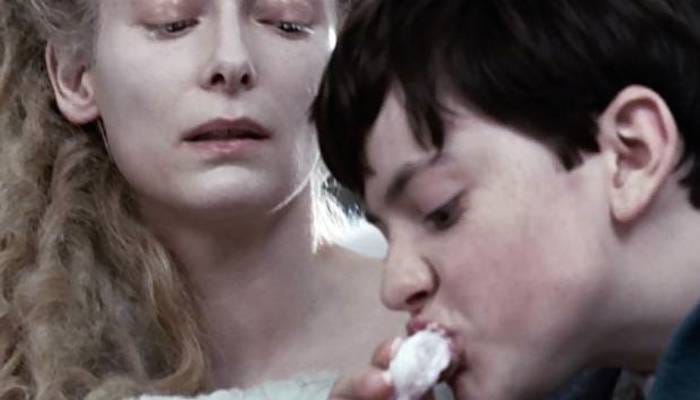
What are the most obvious ways this interaction between character and plot could happen? What are the less obvious ways? (for example, almost all portal fantasies involve the person/s going through the portal and walking around in awe of everything that is different. They almost always are pulled into helping the portal world with some problem.) In my first book, each of the psychopaths responds really differently to the idea that there is a program that is supposed to train them into being a better person: Chloe thinks this idea is silly because she is already perfect and doesn’t need to change, one character honestly wants to be a better person but finds it difficult, another character is indifferent to the program entirely. This saves you from “person does the most obvious thing with the premise.”
What are the tracks that inevitably have to be laid down in the first third of the book? (ie, if it is a mystery, likely the murder will happen here. If it’s a romance, the lovers have to meet.) Think of three different ways those tracks could be laid. (ie, a body is discovered and it is a massive media storm because the family is massively influential/wealthy vs. a body is discovered and the police are kept under strict orders to handle everything in absolute secrecy because the family is massively influential/wealthy vs a body is discovered from a massively influential family because the family is constantly being stalked, and the stalker found the body.)
The middle mechanics of a book are often about “someone wants a thing but they keep being stymied from getting that thing.” What are the five MOST OBVIOUS ways they would be stymied? (ie, the lovers have a misunderstanding because of a miscommunication. The dumb bitch from The Notebook assumes that her dude never cared about her letters because she never bothered to check to see if he actually got them because she is lazy AF. I can’t murder this celebrity because he has 24-7 security. I can’t get to Mount Doom because there are thousands of orcs in the way. Then sit down and brainstorm LESS OBVIOUS ways that they would be stymied. Juliet desperately wants Romeo but keeps sending out wild “go away” signals because she is terrified of love. I can’t murder this celebrity because he has 24-7 security and I AM the 24-7 security.
Imagine the end of this story in ten different ways. If you’re finding trouble generating ideas, remember that they don’t have to be reasonable, expected, or good. The problem is that if you keep coming up with reasonable and expected things, odds are these have been done before and feel familiar and therefore “right.”
Theme
What is this book about? Not in terms of plot, but its about-ness. Game of Thrones is about the disaster that is primogeniture, the corruption of power, that there are things in the magical realm that can’t be controlled or even understood. Never Saw Me Coming is about revenge. As Step Past Darkness is about the power of friendship.
What are the key themes you are interested in exploring?
What themes relate to those themes?
Separate to theme, is there something you are setting about to accomplish in this book? For example, you might be an Indigenous writer writing about a problem in your community that very few people outside your community know about and you want to shed light on it. Or there may be an artistic point you are making. (I think Rachel Cusk’s Outline series is trying to make a point about something artistically.) I specifically wrote my second book to be an homage to Stephen King’s It— it is literally supposed to serve the purpose of “I feel like reading something that makes me feel like It did.” You might be trying to show a representation of something that you feel like has been represented badly or not at all in literature. (This is nonfiction, but Carmen Maria Machado’s In the Dreamhouse is very much a memoir about an abusive gay relationship and addresses how even saying such a thing exists is controversial but to deny that it exists causes harm.)
Who else has written about this theme or tried to accomplish this same thing?
What did they do well, or not so well?
What could you do different?
What could you bring to the table that maybe someone else couldn’t?
Why should someone remember this book ten years after you’ve published it?
book bump

In The Dream House by Carmen Maria Machado. Hey, while we are at it, let me recommend this book. It came up in conversation over the weekend, and I remain adamant that this book, a memoir, is actually better than her more celebrated short story collection. The author, a queer, introspective, shy person with limited romantic experience, goes to graduate school where she is shocked to attract the attention of a beautiful girl who seems super into her. Dream House is a memoir of an abusive relationship, told with each chapter in the style of a different genre. I found it fascinating, educational, extremely inventive. This is how memoirs of relationships should be done (you know, with deep introspection, some pops of research, some creativity.) She is interrogating herself for how and why this happened, and doing so bravely. (The author reads the audiobook, which is very good, though there is a choose your own adventure section that reads fine in the audiobook, but I would like to try reading on the written page.)
Photo by Jonathan Kemper on Unsplash
I've always got story ideas floating around in my head. The result of that, is by the time I start writing a book, I've already got an idea of what the story is about, and have most of the dialogue written. All that's left, when the book is through, is to let it sit for a month or two, then re-read it. That's where I do my revisions, dialogue changes, add or subtract scene, and clean up the plot points.
There’s lot to love in this post. I’m a plotter through and through so it resonates. BUT the jab at the Notebook was an unsuspected LOL—that movie drives me crazy 🤣🤣 Like they could have avoided a lot of drama by … asking a question. Thanks for the great tips.